 FREE Delivery
 Australian Owned
 Spend DISCOUNTS

 All Categories

 Abrasive Block
 Cutting Disc
 Flap Disc
 Grinding Disc
 Hand Pads
 Quick Change Roloc Disc
 Sanding Disc

 BSF
 Left Hand Thread
 Metric Coarse

 Bolts
 Cotter Pins
 Farm Bolt Packs
 Machine Screws
 Nuts
 Nutserts
 Rivets
 Security Screws
 Self Drilling Screws
 Self Tapping Screws
 Socket Screws
 Timber Screws
 Washers

 Coach Screws
 Cup Head Coach Bolts
 Eye Bolts
 Furniture Connector JCB Bolts
 Hex Bolts & Set Screws
 Hex Flange Bolts
 Left Hand Thread Hex Bolts & Set Screws
 Mushroom Head Roofing Bolts
 Plow Bolts
 Purlin Flanged Bolts
 Sems
 Structural K0 Bolts & Nuts

 Auger Bits Heavy Duty
 Combination Drill & Taps
 Countersinking Bits
 Decking Tools
 Drill Sets
 Hex Drive Drill Bits
 Holesaws and Accessories
 Jobber Drill Bits
 Left Hand Drill Bits and Screw Extractors
 Long Series Drill Bits
 Masonry Drill Bits
 ONSITE+ Impact Step Tip Drill Bits
 ONSITE+ Step Tip Step Cutters
 ONSITE+ Step Tip Step Drills
 ONSITE+ Step Tip Reduced Shank Drill Bits
 ONSITE+ Step Tip Long Series Drill Bits
 ONSITE+ Step Tip Combination Drill & Tap
 Reduced Shank Drill Bits
 Single and Double Ended Drill Bits
 Spade Bits

 ThunderMAX
 Autofeed Gun Bits
 Bit Holders
 Drywall Bits
 Hex Bits
 Keys
 Nutsetters
 Phillips Bits
 Post Hex Bits
 Post Torx Bits
 Pozi Bits
 Slot Bits
 Snake Eye Bits
 Socket Adapters
 Square Bits
 Torx Bits
 Tri-Lobular Bits

 Barrel Nut
 Countersunk Timber Screws
 Cross Dowel Nut
 Furniture Connector JCB Bolts
 Tee Nut
 Timber Insert Nut

 Button Flange Head
 Button Head
 Cap Head
 Cheese Head
 Countersunk Head
 Mushroom Head
 Pan Head
 Raised Head
 Round Head
 Sems
 Thread Rolling Screws
 Wing Head

 Cast Snap Hook
 Conduit Saddles
 Dee Shackles
 Double Thread Lag Screws
 Eye Nuts
 Hinges
 Hose Clamps
 Lag Eye Screws
 Linch Pins
 Pad Eyes
 Rigging Screws
 S Hooks
 Saddle Eye Straps
 Spring Hooks
 Swivels
 Toggle Latches
 Turnbuckles
 U Bolts

 Accessories
 Bremick MultiONE®
 Chemical Adhesives
 Chemical Studs & Capsules
 Countersunk Screw Anchors
 Countersunk Sleeve Anchors
 Dome Torx Screw Anchors
 Drop in Anchors
 ETA Approved Anchors
 Eye Screw Anchors
 Hex Flange Screw Anchors
 H-IT Anchors
 Hollow Wall Anchors
 Masonry Drill Bits
 Metal Pin Anchor
 Mungo Frame Anchors
 Mungo Plugs
 Nylon Nail-In Anchor
 Packers
 Plasterboard Plugs
 Plastic Sleeves
 Self Tapping Concrete Screws
 Sleeve Anchors
 Spaghetti Roll
 Suspension Anchors
 Tie Down Screw Anchors
 Toggles
 Universal Screw Anchor
 Wall Plugs
 Wedge Anchors | Trubolts

 Acme Nut
 All Metal Lock Nut
 Barrel Nut
 Cage Nut
 Cap Nut
 Channel Nut
 Conelock Nut
 Cross Dowel Nut
 Dome Nut
 Eye Nuts
 Flange Nyloc Insert Nut
 Flange Nut
 Hex Head Plug Cover
 Hex Rod Coupler Nut
 Hex Standard Nut
 K-Lock Nut
 Left Hand Thread Nut
 Lock Nut Thin
 Nutserts | Rivet Nuts
 Nyloc Insert Nut
 Plow Nut
 Push Nuts
 Shear Security Nut
 Slotted Castle Nut
 Square Nut
 Slab Tee Nut
 Structural K0 Nut
 Tee Nut
 Thin Nyloc Insert Nut
 Timber Insert Nut
 Weld Nut
 Wing Nut

 Choose by Material
 Choose by Style
 Nutsert Tools

 Circlips
 Cotter Split Pins
 Dowel Pins
 Linch Pins
 Push Nuts
 R Clip Humpback Pins
 Spring Roll Pins
 Wave Spring Roll Pins

 Countersunk Standard
 Countersunk Sealed
 Dome Standard
 Dome Multigrip
 Dome Peeled
 Dome Sealed
 Dome Painted
 Large Flange Standard
 Large Flange Peeled
 Structural Dome
 Structural Countersunk
 Tools

 Screws only for Metal
 Screws only for Timber
 Decking Screw Bundles
 Decking Tools

 Bugle Batten Metal Screws
 Button Pan & Wafer Metal Screws
 Countersunk Metal Screws
 Countersunk with Wings Metal Screws
 Flat Top Metal Screws
 Hex Flange Metal Screws
 Painted Metal Screws
 Plasterboard Metal Screws
 Roofing Metal Screws
 Series 500 Metal Screws

 Bugle Batten Timber Screws
 Button & Wafer Timber Screws
 Chipboard Screws
 Coach Screws
 Countersunk Timber Screws
 Flat Top Stitching Timber Screws
 Hex Flange Timber Screws
 Landscape Timber Screws
 Painted Timber Screws
 Plasterboard & Villaboard Screws
 Roofing Timber Screws

 Machine Screws
 Nuts
 Security Bits
 Self Drilling
 Self Tappers

 Countersunk Head
 Mushroom Head
 Pan & Button Head
 Plastite Screws

 Anti-Seize
 Cutting Compound
 Glue & Adhesive
 Grease
 Pipe & Gasket
 Silicone & Sealants
 Threadlocking | Loctite

 Button Head Socket
 Countersunk Head Socket
 Low Head Socket Cap
 Shoulder Socket
 Socket Head Cap
 Socket Set (Grub)

 Die Nuts
 Taps
 Tap Wrenches

 Adhesive Guns
 Blades
 Decking Tools
 Drop In Anchor Tools
 Hex Allen Keys
 Hollow Wall Anchor Tools
 Knives
 Measuring Tapes & Rulers
 Scissors & Snips
 Technical Guides

 Round
 Round with Plate
 Square

 Belleville Washers
 Conical Spring Washers
 Countersunk Serrated Lock Washers
 Cup Washers
 Curved Washers
 External & Internal Tooth Lock Washers
 Flat Round Washers
 Flat Round Washers DIN125
 Flat Round Washers DIN433 Small OD
 Heavy Round Washers
 Heavy Square Washers
 High Tensile Round Washers
 Mudguard Round Washers
 Nord-Lock® Washers
 Nylon Flat Round Washers
 Red Fibre Flat Round Washers
 Roofing Screw Washers
 Schnorr® Washers
 Shoulder Washers
 Spring Lock Washers
 Structural K0 Washers
 Wave Washers
Jack Nut

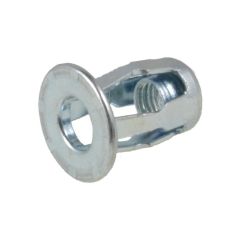
Its body splays outward against the back face when the bolt is tightened, spreading load over a large area.
WHY A RIVET NUT, NOT A WELD NUT OR TEE NUT
A rivet nut sets a captive thread into thin sheet, tube or panel from one side - no welding, no tapping and no access to the back of the work. A weld nut needs welding gear and clean bare metal; a tee nut needs a timber panel to bite into; a standard hex nut needs you to hold a spanner on the back. The rivet nut is the captive-nut answer when the material is too thin to tap and the back face is sealed or unreachable.
BEST FIT
Choose a jack nut for thin sheet, plastic, fibreglass and hollow panels - caravans, boats, signage - where pull-through is the risk.
SIZES AND MATERIALS
6 stocked variants, zinc plated, M4 to M6.
Setting: these are set by tightening the bolt - no nutsert tool is needed. See the installation guide for the step-by-step method.
WHY AUSTRALIA TRUSTS BOLT & NUT
With 15+ years selling fasteners online from Brisbane, we hold over 25,000 stock lines and 200 million pieces - 98.75% of online orders placed before 1pm leave same day. Save more as you buy more - up to 13 price breaks plus 3 spend-tier discounts. Read our customer reviews or get in touch if you need help picking the right jack nut rivet nuts.
-
Free shipping
In stock
-
Free shipping
In stock
-
Free shipping
In stock
-
Free shipping
In stock
-
Free shipping
In stock
-
Free shipping
In stock
1/4" x 18.9 UNC / BSW Coarse Jack Nut Large Flange Round Open Smooth Grips 0.4-4.7As low as $0.468 each
TECHNICAL RESOURCES
Not sure which rivet nut you need? Our Nutsert Finder helps you choose the right rivet nut by size, material and grip range.
Hole size, grip range and thread reference: Technical Resources. Matching setters in Nutsert Tools.


