Nutserts | Rivet Nuts

Hole size, grip range and stroke setting - the guide shows how to get a solid, reusable thread first time, plus the no-tool method for one-off jobs.

Rivet Nuts (Nutserts) for Blind-Side Threaded Fastening
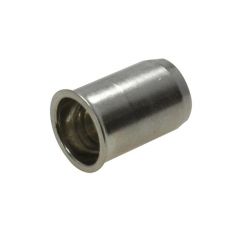
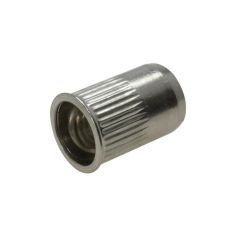
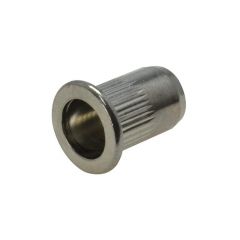
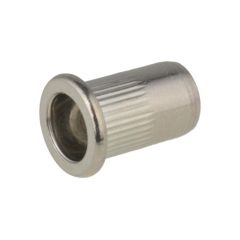
Rivet nuts (also known as nutserts, riv nuts, blind nuts or rivet nuts) provide a permanent threaded socket in a substrate accessible from only one side. The nutsert is inserted into a clearance hole, then a setting tool collapses the body behind the substrate — creating a fastener that's mechanically locked in place and accepts a standard bolt. The premium solution for thin or brittle substrates where a tapped thread won't hold and a captive nut can't be reached.
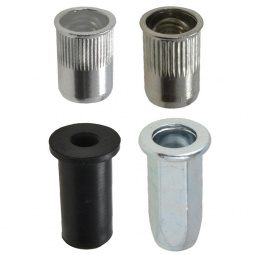
We stock 250+ rivet nut variants from our Brisbane warehouse: countersunk head, large flange, thin large flange and rubber well-nut profiles, in M3 through M12 metric coarse and select UNC/BSW imperial threads. Materials cover zinc-plated steel, A2-70 G304 and A4-70 G316 marine stainless, aluminium and black rubber.
Check our reviews from DIYers, tradespeople, builders, manufacturers, government, councils, engineers across Australia.
MATERIALS
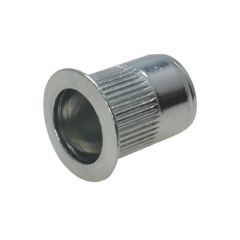
Zinc Plated Steel — Carbon-steel rivet nuts with electroplated zinc coating. The standard general-purpose material — strongest pull-out strength and lowest cost. AISI 1010/1008 steel to BS 970 040A04 spec. 117 variants in the range. Use indoor or in protected environments.
Stainless A2-70 G304 — Standard stainless grade for general external use, marine-adjacent applications and food/dairy installations. 60 variants. Standard A4 corrosion resistance with workable hardness for cold forming.
Stainless A4-70 G316 Marine Grade — Molybdenum-alloyed marine stainless for coastal, salt-spray and chemical-exposed applications. 26 variants. Required within 300m of the coast or in chloride-rich environments.
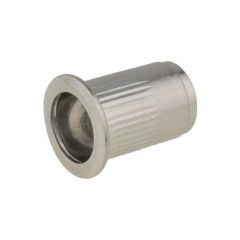
Aluminium — Lightweight aluminium rivet nuts. Easier to set than steel (lower setting force), but lower pull-out strength. Used in aluminium substrates to avoid galvanic corrosion, in lightweight assemblies, and where the substrate itself is thin or soft. 31 variants.
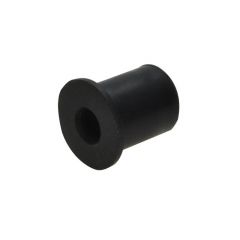
Black Rubber (Well Nuts) — Rubber-bodied rivet nuts with a brass internal thread. Compress into the substrate creating a sealed, vibration-absorbing fixing. Used in marine, automotive and electronics where you need a waterproof or shock-absorbing threaded insert. 16 variants.
HEAD STYLES
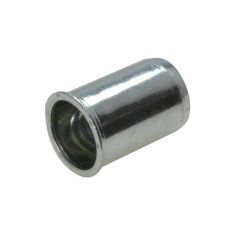
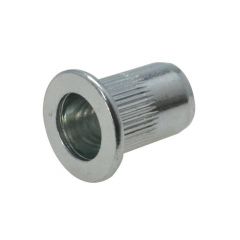
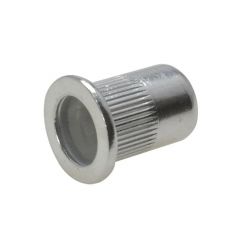
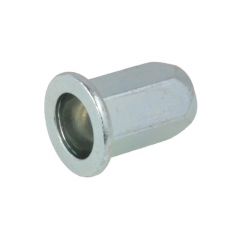
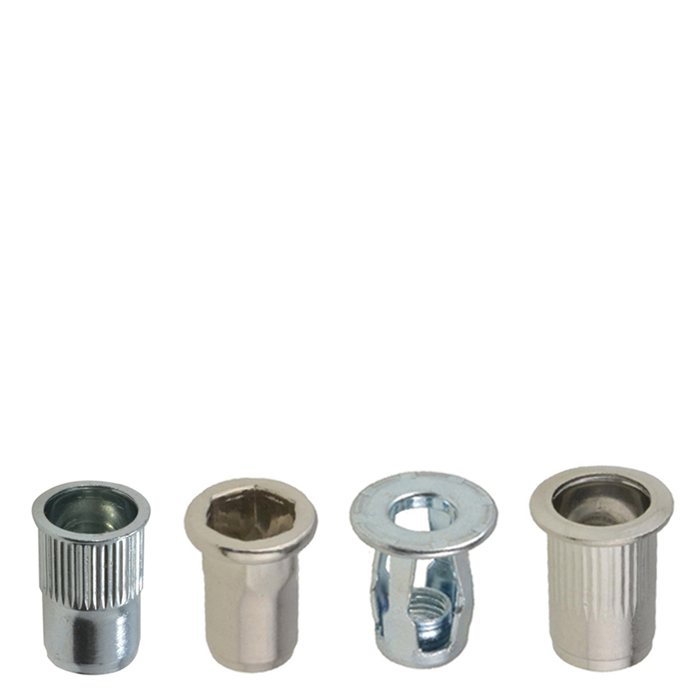
Large Flange Head — Oversize head that distributes clamping load across a wider area. The standard head profile for general nutsert use. Sits proud of the work surface. Stronger pull-through resistance than countersunk in thin or soft substrates.
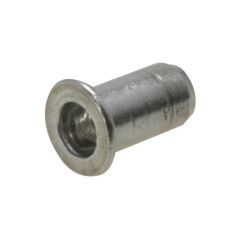
Countersunk Head — Tapered head that sits flush with the work surface — used wherever a protruding head would interfere with adjacent parts or visible finish. Requires a matching countersink in the substrate.
Thin Large Flange Head — Reduced-height flange head for thin-substrate applications and where clearance under the head is limited. Same load distribution as the standard flange with lower profile.
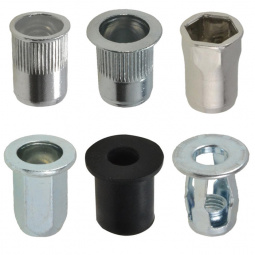
Jack Nut — Specialised large-flange nutsert designed to expand into much thicker substrates than a standard nutsert. The internal sleeve splits and folds outward on setting, creating an extended back-side flare.
Plus Nut — Reinforced large-flange variant for high pull-out loads. Heavier body, larger flange, higher clamp strength.
BODY PROFILES (SMOOTH / KNURLED / SPLINED / HEXAGONAL)
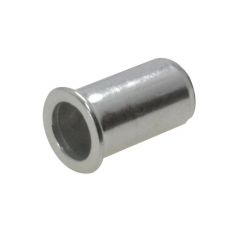
Smooth Round — Plain cylindrical body. Used in pre-cut round clearance holes; relies on the flare and head to resist rotation. Suits substrates where rotation isn't an issue (fastener tightening with a wrench).
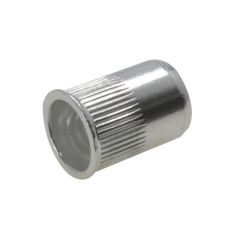
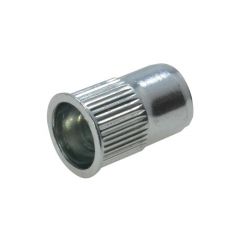
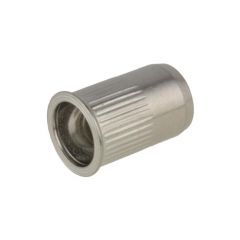
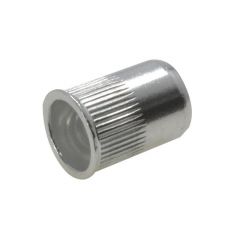
Knurled — Body with diamond-knurled exterior. The knurls bite into the substrate as the nutsert is set, preventing the nutsert from spinning when the user tightens a bolt into it.
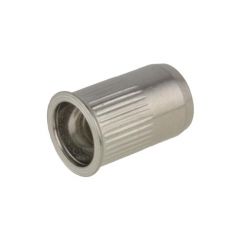
Splined — Longitudinal grooves run along the body. Strongest anti-rotation grip; the splines lock into the substrate edge.
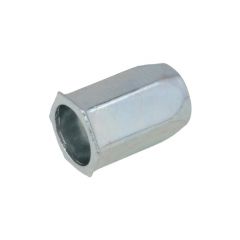
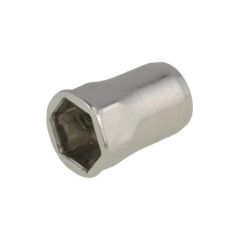
Full Hex / Half Hex — Hexagonal exterior that locks into a matching hex-punched hole. The strongest anti-rotation interface for very high torque applications. Half-hex has hex on one end and round on the other.
OPEN END VS CLOSED END
Closed-end (blind) nutserts have a sealed back — the threaded bore stops short of the open end, sealing the substrate from moisture, dust or fluid. Used in waterproof applications (marine, outdoor automotive, tanks). Open-end nutserts have a through-hole — the bolt can pass through the nutsert and extend out the back if needed. Cheaper to manufacture and used where sealing isn't a requirement.
GRIP RANGE
Every rivet nut has a specified grip range — the minimum and maximum combined thickness of the substrate it will clamp through. Choosing the wrong grip range is the most common installation failure: too thin and the nutsert won't expand to lock; too thick and the setting tool can't pull it through. Each product page lists the grip range (e.g. "Grips 0.5-3mm"). Measure your substrate thickness and pick a nutsert whose grip range contains that thickness.
OUR RANGE
Browse by style — round, hex, half hex, jack nut, plus nut and well nut.
Browse by material — zinc plated, stainless steel, aluminium and black rubber.
SETTING CAPACITY BY TOOL
Which nutsert size each tool is rated to set. A green tick means the tool sets that size in at least one material; see the product page for the per-material (aluminium / steel / stainless) breakdown.
| Tool | M3 | M4 | M5 | M6 | M8 | M10 | M12 |
|---|---|---|---|---|---|---|---|
| FAR KJ21view › | ✓ | ✓ | ✓ | ✓ | ✓ | ✗ | ✗ |
| Gesipa GBM10view › | ✓ | ✓ | ✓ | ✓ | ✗ | ✗ | ✗ |
| POP PNT110view › | ✓ | ✓ | ✓ | ✓ | ✗ | ✗ | ✗ |
| POP PNT210view › | ✗ | ✗ | ✓ | ✓ | ✓ | ✓ | ✓ |
| RT-512view › | ✗ | ✗ | ✓ | ✓ | ✓ | ✓ | ✓ |
| Geiger GHTJ703A (2-in-1)view › | ✓ | ✓ | ✓ | ✓ | ✗ | ✗ | ✗ |
| Geiger GHTH3 (2-in-1)view › | ✗ | ✓ | ✓ | ✓ | ✓ | ✓ | ✗ |
FREQUENTLY ASKED QUESTIONS
Can stainless fasteners be used with aluminium?
Yes — and for most applications, no special precautions are needed. The combination is widely used in industries where strength and corrosion resistance matter (marine, automotive, structural aluminium). For applications with sustained moisture or salt exposure, a few simple steps (barrier washer, sealant, matched-anodising) prevent any long-term galvanic corrosion concerns. Full guidance: Can stainless fasteners be used with aluminium?
What's the difference between a nutsert, rivet nut and well nut?
Nutsert, rivet nut, riv nut and blind nut all describe the same fastener — a threaded insert that sets into a one-sided substrate. The names are regional/brand variations of the same product. A well nut is specifically a rubber-bodied rivet nut that creates a sealed, vibration-absorbing fixing — the body is rubber instead of metal. Well nuts are a subset of rivet nuts.
What tool do I need to install a rivet nut?
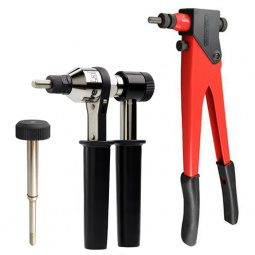
A rivet nut setting tool (also called a nutsert tool or rivnut tool). Three main types: (1) hand-lever tools for occasional use, M3-M8 — cheap, manual force; (2) hand-spinner tools where you wind a mandrel by hand — slow but no special equipment needed; (3) pneumatic or battery-powered tools for production work or larger sizes M10-M12. The tool threads onto the back of the nutsert, anchors against the front of the substrate, then pulls the threaded mandrel to compress the body. Don't try to set a rivet nut by tightening a regular bolt — you'll strip the bolt or crack the nutsert. Full walkthrough, stroke setting and troubleshooting: the ultimate guide on how to install nutserts.
Can I install a rivet nut without a specialised tool?
Yes, in a pinch — using a standard high-tensile bolt, two nuts and a washer. Run a standard bolt through the nutsert with a heavy washer and two nuts (one as a jam nut on top, one to be tightened). Insert the assembly into the hole. Hold the bolt steady with a spanner and tighten the lower nut against the washer — the bolt's tension compresses the nutsert into place. Once set, back the nuts off and remove. Works but slow, gives less consistent flare than a proper tool, and the bolt threads may gall. Always prefer a proper setting tool.
How do I pick the right grip range?
Measure the substrate thickness at the installation point. Pick a rivet nut whose grip range encompasses that thickness — e.g. for a 2mm panel, choose a nutsert rated "Grips 0.5-3mm" or "Grips 1.5-3mm". If your substrate thickness is at the edge of one range (e.g. exactly 3mm with a 0.5-3mm rated nutsert), choose the next range up (e.g. 3-5mm) for a more secure flare. Multi-grip variants like jack nuts expand into much wider thickness ranges if your substrate varies.
What's the difference between closed-end and open-end rivet nuts?
Closed-end (blind) rivet nuts have a sealed back face — the threaded bore stops short of the rear of the body, sealing the substrate from water, dust or fluid passing through. Used in marine, outdoor automotive, tanks, sealed enclosures and any waterproofing application. Open-end rivet nuts have a through-hole — the bolt can pass right through and extend out the back. Open-end is cheaper and used in general indoor and dry applications.
Which body profile do I need — smooth, knurled, splined or hex?
Smooth round is fine for low-torque applications where the bolt won't spin the nutsert as it's tightened. Knurled body has a diamond pattern that bites into the substrate to resist rotation — the standard upgrade for moderate-torque jobs. Splined body has longitudinal grooves that lock against the substrate edge — strongest anti-rotation grip in a round hole. Full hex or half hex bodies fit into a matching hex-punched hole and provide the strongest anti-rotation lock — used for very high-torque applications like bolting heavy components onto the nutsert.
Can I use rivet nuts in plastic, fibreglass or thin sheet metal?
Yes, but pick the right material and grip range. For plastic and fibreglass, use aluminium rivet nuts with a large flange — aluminium sets with lower force (reduces the risk of cracking brittle substrates) and the large flange distributes load. For thin sheet metal (under 1mm), use a thin large-flange nutsert specifically rated for that grip range — standard rivet nuts won't get enough material to grip onto. For very soft or flexible substrates, rubber well nuts often work better than rigid metal nutserts.
What size hole do I drill for a rivet nut?
The hole size depends on the rivet nut thread and body profile. Generally: M3 needs a 4.9-5.1mm hole, M4 needs 6.0-6.1mm, M5 needs 7.0-7.1mm, M6 needs 9.0-9.1mm, M8 needs 11.0-11.1mm, M10 needs 13.0-13.1mm, M12 needs 16.0-16.1mm. Knurled and splined variants typically need 0.1-0.2mm larger than smooth. Each product's spec sheet lists the exact hole diameter — always verify before drilling. For hex-bodied variants, use a hex punch matched to the body size, not a round drill.
How much torque can I apply to a bolt threaded into a rivet nut?
Less than you can apply to the same bolt in a tapped thread or with a nut on the back — the rivet nut's pull-out strength is the limiting factor, not the bolt itself. As a rule of thumb: M6 zinc rivet nut handles ~5-10 Nm; M8 handles ~10-20 Nm; M10 handles ~20-40 Nm. Stainless and aluminium take less than zinc. The substrate thickness matters too — thicker substrates allow more torque. Each product page lists the recommended max torque; never exceed it or the nutsert spins in the hole.
Are rivet nuts removable?
Not without destroying them. To remove, drill through the centre of the nutsert with a drill slightly larger than the thread (e.g. 7mm drill for an M6 nutsert), which removes the threaded bore and lets you punch the remaining shell out. A new nutsert can then be installed in the same hole. There's no way to back a set rivet nut out intact — the body has expanded behind the substrate and is mechanically locked.
WHY AUSTRALIA TRUSTS BOLT & NUT
With 15+ years selling fasteners online from Brisbane, we hold over 25,000 stock lines and 200 million pieces — 98.75% of online orders placed before 1pm leave same day. Save more as you buy more — we offer up to 13 price breaks plus 3 spend-tier discounts. Read our customer reviews or get in touch if you need help picking the right rivet nut.
-
Assortment Kits -
Choose by Material -
Choose by Style -
Nutsert Tools
Find the right rivet nuts (nutserts) for your project at Bolt & Nut Australia. We stock 250+ variants online — countersunk, large flange and thin flange in zinc-plated steel, A2-70 G304 and A4-70 G316 stainless, aluminium and rubber. Grip ranges from 0.4mm to 13mm. Order online for same-day Brisbane dispatch and free delivery Australia-wide.
TECHNICAL RESOURCES
Not sure which rivet nut you need? Our Nutsert Finder helps you choose the right rivet nut by size, material and grip range.
Every rivet nut subcategory has its own CAD drawings and spec PDFs linked at the bottom of its page. For the full library, see our Technical PDF's Library. New to nutserts, or setting one for the first time? See our step-by-step guide on how to install nutserts, with CAD diagrams for every step.