Header imageFREE Delivery Header imageAustralian OwnedHeader imageSpend DISCOUNTS

Taps & Dies

Taps & Dies

Taps, Dies and Combination Drill-Taps for Cutting and Chasing Threads

Taps cut internal threads in drilled holes. Dies cut external threads on round bar or rod. Together they cover every job that needs a fresh thread cut from raw material, or a damaged thread chased back to clean engagement. Combination drill-taps do both in one operation - drill the pilot hole and cut the thread without changing tools.

Bolt & Nut Australia stocks the Sutton Tools, Alpha and Geiger ranges from Brisbane: spiral point gun taps for through holes and machine tapping in steel and alloy, spiral flute taps for blind holes that need clean chip evacuation, straight flute taps for hand tapping and general workshop use, hex die nuts for thread chasing on bolts and studs, and combination HSS drill-tap sets for fast single-operation tapping in sheet metal and thin plate.

We've been supplying these online from Brisbane for over 15 years. With 25,000 stock lines and over 200 million pieces in stock, we carry one of the most comprehensive ranges of taps, dies and drill-taps available in Australia - from metric M2.5 through M30, UNC, UNF, BSW, BSF imperial series, in HSS and HSSE tool steel. Save more as you buy more - we offer up to 13 price breaks plus 3 spend-tier discounts.

MATERIALS AND COATINGS

HSS (High-Speed Steel): The standard cutting material for hand and general machine taps. HSS resists the heat generated at the cutting edge and holds an edge through hundreds of tapping cycles in mild steel, brass and aluminium. Most Alpha taps and the entire combination drill-tap range are HSS.

HSSE (High-Speed Steel with Cobalt, also known as M35): 5% cobalt is added to HSS to lift heat resistance and edge hardness. HSSE taps stay sharp longer in stainless steel, alloy steel and tougher castings. The Sutton Tools spiral point gun-tap range and most production-grade taps use HSSE.

Carbon Steel: Used on the hex die nuts where thread-chasing torque is low and the cutting edges work against soft existing threads. Carbon steel die nuts are the workshop standard for cleaning rust, paint or burrs out of a bolt thread without removing material from a fresh thread.

UNDERSTANDING THREAD PITCH

Every tap and die cuts ONE specific size and ONE specific pitch. Metric pitch is given in millimetres crest-to-crest (M8 x 1.25p = standard coarse, M8 x 1.0p = fine). Imperial pitch is given in threads per inch - 1/4" UNC = 20 TPI, 1/4" UNF = 28 TPI, 1/4" BSW = 20 TPI but with a 55-degree Whitworth profile. Confirm the SIZE, the PITCH and the SERIES before ordering.

Common metric coarse pitches: M3=0.5, M4=0.7, M5=0.8, M6=1.0, M8=1.25, M10=1.5, M12=1.75, M16=2.0, M20=2.5, M24=3.0. Common metric fine: M8=1.0, M10=1.25, M12=1.25, M16=1.5. The full per-SKU pitch is published against every tap in the Sutton, Alpha and Geiger ranges. If you need to identify the pitch of an existing thread, use a thread pitch gauge or match against a known bolt.

CHOOSING THE RIGHT TAP FOR THE JOB

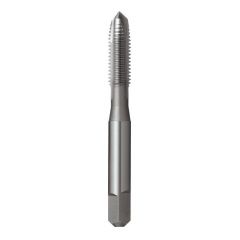
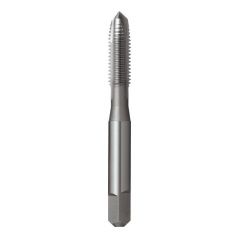
Spiral point (gun tap): Pushes chips DOWN through the hole and out the bottom. Use in through-holes only - in a blind hole the chips have nowhere to go. Sutton spiral-point HSSE taps are the workshop standard for power tapping in mild steel and alloy.

Spiral flute: Pulls chips UP and out the top of the hole. Use in blind holes where chip evacuation is critical. The aggressive helix angle also handles soft, ductile materials (aluminium, copper, plastic) where straight flutes would clog.

Straight flute: The traditional general-purpose form. Cuts both through and blind holes, but doesn't actively eject chips - the operator has to reverse the tap to clear them. Best for hand tapping where the operator has full control.

Combination drill-tap: Drills the pilot AND cuts the thread in a single tool change. Designed for sheet metal and thin plate where one pass is enough. Not for deep holes - the drill section is short.

HOW TO CALCULATE TAP-DRILL SIZE

The single most common workshop error in tapping is using the wrong-size pilot hole. Too small and the tap binds, snaps or cuts a thread that won't accept a standard bolt. Too large and the thread has too little engagement to hold load. Every tap has ONE correct drill size for a given engagement percentage. The formulas below cover the standard 75% engagement (the default for general-purpose tapping).

Metric coarse and metric fine: drill diameter = nominal thread diameter minus pitch. Examples: M6 x 1.0p coarse = 6 - 1.0 = 5.0mm pilot; M8 x 1.25p coarse = 8 - 1.25 = 6.75mm pilot (round to nearest stocked size, e.g. 6.7 or 6.8); M10 x 1.5p coarse = 10 - 1.5 = 8.5mm pilot; M12 x 1.75p coarse = 12 - 1.75 = 10.2mm pilot (round to 10.2 or 10.25). For metric fine: M8 x 1.0p fine = 8 - 1.0 = 7.0mm pilot.

Imperial UNC and UNF: use the standard tap-drill chart (the formula isn't a clean subtraction the way metric is). Common UNC sizes: 1/4" UNC 20 TPI = #7 drill (5.1mm); 5/16" UNC 18 TPI = F drill (6.5mm); 3/8" UNC 16 TPI = 5/16" drill (7.9mm); 1/2" UNC 13 TPI = 27/64" drill (10.7mm). Common UNF sizes: 1/4" UNF 28 TPI = #3 drill (5.4mm); 5/16" UNF 24 TPI = I drill (6.9mm); 3/8" UNF 24 TPI = Q drill (8.4mm). For BSW and BSF, contact us for the matched-drill data sheet.

Adjustments by material: the 75% engagement default assumes mild steel. For harder materials (alloy steel, stainless, cast iron) drop to 60-65% engagement by drilling slightly LARGER than the standard (easier tapping, less broken-tap risk). For softer materials (aluminium, brass, plastic) hold the 75% or even step up to 80% for tighter threads on lower-strength substrate. Reference the Technical PDF's Library for the full coarse / fine / extra fine drill-size chart.

CUTTING FLUID SELECTION

The right cutting fluid extends tap life by 3-5x compared to cutting dry. Wrong fluid (or no fluid) is the second most common reason for broken taps. Match the fluid to the substrate:

Steel (mild, carbon, low-alloy): sulphurised tapping oil. The sulphur additive films the cutting edge under pressure, reducing friction and heat. Molyslip Metal Cutting Compound and similar paste-form compounds work well on bench work; liquid sulphurised oils (Alpha CDT) suit production tapping. See the Cutting Compound range.

Stainless steel: heavy sulphurised + chlorinated cutting oil. Stainless work-hardens fast - if the cutting edge stops biting and starts rubbing, the surface hardens and the next pass can't bite. Constant lubrication is critical. HSSE (M35) tap form recommended alongside the upgraded fluid.

Aluminium and aluminium alloys: WD-40, kerosene, or a dedicated aluminium cutting fluid. Sulphurised oils stain aluminium and aren't needed for the cutting load. Spiral-flute tap form recommended to evacuate the gummy chips that aluminium produces.

Brass and bronze: dry or light mineral oil. Brass cuts cleanly without heavy lubrication; sulphurised oils can stain the brass surface.

Cast iron: dry. Cast iron self-lubricates via the graphite content and lubricant tends to mix with cast iron chips into an abrasive paste that wears the tap faster than dry cutting.

Plastic (acrylic, ABS, nylon, polycarbonate): dry or water with a drop of dish soap. Oil-based fluids attack some plastics and aren't needed for the low cutting loads. Spiral-flute tap form recommended.

BROKEN TAP REMOVAL

A tap snapped off in a tapped hole is one of the most frustrating workshop failures. The fragment is hardened HSS or HSSE - much harder than a standard drill bit - so drilling it out cleanly is rarely an option. The realistic extraction methods, in order of how often they succeed:

1. Tap extractor - a set of hardened prongs that engage the tap's existing flutes and let the operator wind the tap back out. Works on cleanly-broken taps where the flutes are still accessible above the workpiece surface. Buy a stocked extractor set sized to the tap diameter; use slow steady reverse pressure to avoid breaking off the extractor prongs.

2. Alum solution (chemical etch) - the workshop trick for getting a broken tap out of an aluminium part. Alum (potassium aluminium sulphate, available at pharmacies and brewing suppliers) dissolves HSS tap steel over 24-48 hours without attacking aluminium. Soak the part in a saturated alum solution at 60-80°C, change the solution daily, lift the dissolved tap out with a pin. Works only on aluminium hosts.

3. Spark erosion (EDM) - the professional solution for high-value parts. A specialist shop uses an EDM (electrical discharge machining) head to burn the tap out of the hole without damaging the surrounding thread. Cost: typically $80-$200 per extraction depending on tap size and access; cheaper than scrapping a high-value casting.

4. Drill out + Helicoil repair - when the tap is hopelessly seized and the part isn't critical: drill out the broken tap (carbide drill, slow speed, lots of coolant) to a larger diameter and install a thread repair insert. See the Thread Repair range for the matching insert + tap kit. The repaired hole is stronger than the original tapped thread was.

5. Scrap and remake - the honest answer for low-value parts. Time spent on extraction often exceeds the cost of remaking the part. Apply the prevention rules from the sections above (correct pilot size, correct cutting fluid, slow reversal to break chips) and you'll see broken taps once or twice a year instead of once a week.

OUR RANGE

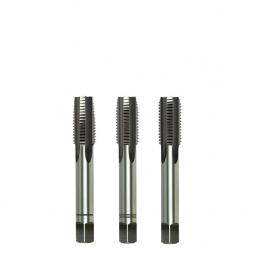
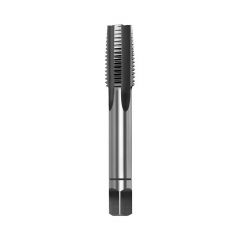
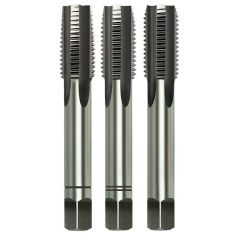
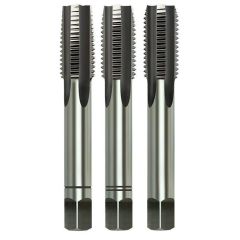
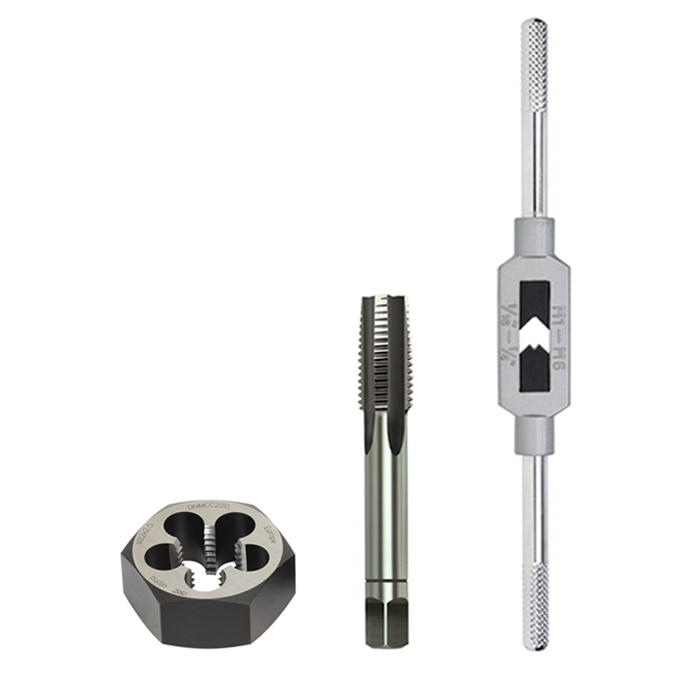
Taps - Sutton Tools HSSE spiral point gun taps in metric coarse and metric fine series, plus Alpha HSS straight flute taps. Sizes M2.5 through M30 metric, UNC, UNF, BSW, BSF. ISO 529 compliant. The widest single sub-cat in the range - 600+ SKUs covering nearly every common tapping requirement.

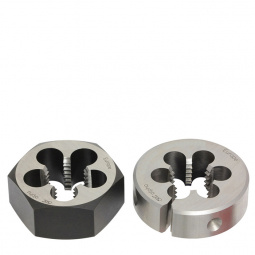
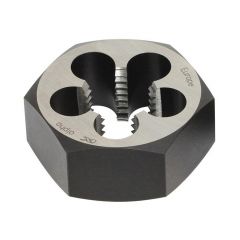
Die Nuts - Alpha carbon-steel hex die nuts in metric coarse, metric fine, UNC, UNF and BSW. Used to chase damaged or rust-affected external threads back to clean engagement, or to cut a fresh thread on round bar. Hex form lets the die nut drive with a standard spanner.

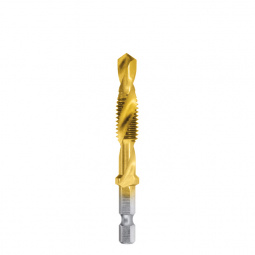
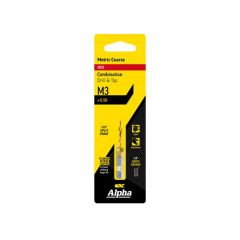
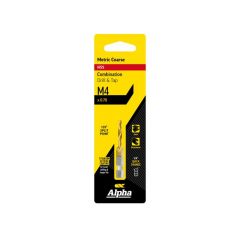
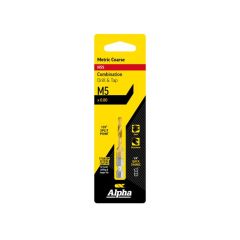
Combination Drill & Taps - Alpha HSS combination drill-tap sets in metric coarse, sized M3 through M12. Carded single-pack format. Drill the pilot hole and cut the thread in one tool change - ideal for sheet metal, thin plate and quick on-site repairs.

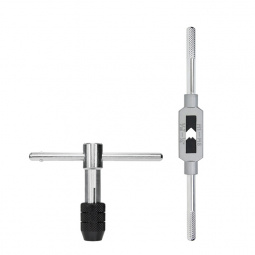
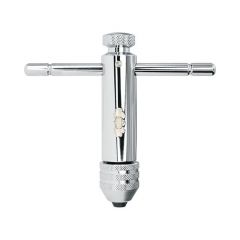
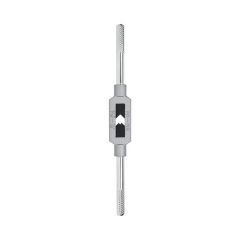
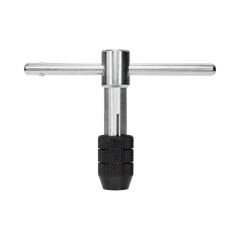
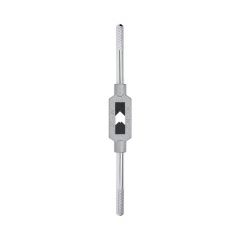
Tap Wrenches - Alpha hand tools that hold a tap during cutting. Bar wrenches (TW-00 to TW-8) for bench work and larger taps; T-handle wrenches (TW-12, TW-14) for tight spaces; ratchet T-handle wrenches (TW-12R, TW-14R) for repetitive production tapping. Capacity range M1 to M38 (1/16" to 1-1/2") across the nine SKUs in the range.

Need help choosing the right grade or size? Our Technical PDF's Library has specification guides and technical charts. Prices include GST and free standard delivery anywhere in Australia.

FREQUENTLY ASKED QUESTIONS

How do I work out the tap-drill size for a metric tap?

The simple rule is: tap drill size = nominal thread diameter minus pitch. M8 x 1.25p needs an 8 - 1.25 = 6.75mm pilot hole, M10 x 1.5p needs 10 - 1.5 = 8.5mm. This gives ~75% thread engagement, the standard for general-purpose tapping. For harder materials drop to 60-65% engagement (slightly larger pilot, easier tapping); for softer materials lift to 80% engagement (slightly smaller pilot, stronger thread).

What's the difference between a spiral point tap and a spiral flute tap?

Spiral point pushes chips DOWN and out the bottom of the hole - use in through-holes. Spiral flute pulls chips UP and out the top - use in blind holes. Mixing them up is the most common workshop mistake: a spiral point in a blind hole packs chips at the bottom and snaps the tap; a spiral flute in a through hole brings chips back up the spindle into the workpiece face.

Why is there an 'M' grade and a 'D' grade on some taps?

M grade taps cut a slightly oversize thread, suited to general-purpose tapping where some clearance is needed for bolt installation. D grade taps cut to a tighter tolerance, used in production where the thread has to mate with a specific class fit. For one-off workshop work, M grade is the default - it's more forgiving of slight misalignment.

Can I use a die nut to cut a fresh thread on plain round bar?

Yes for short threads (one to two diameters long) in mild steel or brass. For longer or harder threads, a standard split die in a die stock is the better tool - the split die can be adjusted to start oversize and tighten progressively, reducing cutting load and improving thread finish. Die nuts are optimised for chasing existing threads back to clean, not for repeated full-depth cuts.

Why won't my tap start straight?

Three common causes: pilot hole drilled at an angle (use a drill press, not a hand drill); first tap too aggressive (start with a taper-tip taper tap, not a spiral point); no cutting fluid (steel taps need oil, aluminium needs WD-40 or kerosene). Once the first three threads are cut straight, the tap self-aligns for the rest of the hole.

What cutting fluid do I use for tapping stainless steel?

A heavy sulphurised cutting oil (tapping fluid). Stainless work-hardens fast under cutting friction - if the tap stops cutting and starts rubbing, the surface hardens and the next pass can't bite. Constant lubrication and constant cutting load are critical. The Sutton HSSE tap range is specifically rated for stainless in workshop conditions.

Is BSW the same as UNC?

Close but not identical. BSW (British Standard Whitworth) is a 55-degree thread profile, UNC (Unified Coarse) is 60 degrees. They share some sizes (1/4" BSW = 1/4" UNC = 20 TPI nominal) but the flank angle difference means they don't interchange cleanly under load - a bolt and nut from different series can wind on but won't seat properly. Always confirm the series, not just the size and TPI.

Can I sharpen a worn HSS tap?

Workshop sharpening of a damaged tap is possible (grind the chamfer back on the lead) but rarely worth the time for small taps. For M10 and below, a fresh HSS tap costs less than the workshop time to grind one. For larger production taps (M16+) where the tap is expensive, professional regrinding services are available.

Why does my tap break when I'm tapping deep blind holes?

The cause is always one of three: chip packing (use a spiral flute, not spiral point or straight), insufficient lubrication (constant cutting fluid), or no chip-clearing reversal (back off every 1-2 turns to break chips). Tap fracture in deep blind holes is almost always preventable by choosing the right tap form for the job.

Do I need a tap wrench, or can I drive taps with a power tool?

Hand taps (taper, plug, bottom) need a tap wrench for the operator control they provide. Spiral point and spiral flute taps are designed for power tapping in a drill press or CNC head. Combination drill-taps run in a drill or impact driver. Matching the drive method to the tap design avoids broken taps.

Where can I find the pitch and drill-size chart for all common threads?

The full pitch and drill-size chart is in our Technical PDF's Library library. For fastener-size identification on the bolt side, see Identify your fastener size.

Where do I send a tap that needs sharpening?

For high-value taps (M16+, special pitches, large production runs), contact us via Contact and we'll point you at a recommended Australian regrinding service. For standard small taps, replacement is generally faster and cheaper than regrind.

WHY AUSTRALIA TRUSTS BOLT & NUT

With 15+ years selling fasteners online from Brisbane, we hold over 25,000 stock lines and 200 million pieces - 98.75% of online orders placed before 1pm leave same day. Save more as you buy more - we offer up to 13 price breaks plus 3 spend-tier discounts. Read our customer reviews or get in touch if you need help picking the right tap or die.

  1. Close Icon
    Combination Drill & Taps
  2. Close Icon
    Die Nuts
  3. Close Icon
    Tap Wrenches
  4. Close Icon
    Taps
View as Grid List

Items 1-40 of 433

Set Descending Direction
Page
per page

Sutton Tools and Alpha taps, dies and combination drill-tap sets - cut internal and external threads, clean up damaged threads, or drill and tap in one operation. M2.5-M30 metric, UNC, UNF, BSW, BSF. ISO 529.

scroll icon