Furniture Fasteners

Furniture Fasteners and Connector Hardware for Joinery and Assembly
Furniture fasteners are the engineered connectors behind every demountable joint and timber-fixing application in flat-pack furniture, cabinetry, joinery, shop fittings and on-site assembly. Whether you are building a knock-down wardrobe that has to ship flat, fitting a kitchen carcase that will be assembled on site, or repairing a piece of furniture where a barrel nut has stripped, the right fastener turns a tricky joint into a clean, demountable, repeatable assembly. Our range covers JCB connector bolts and their matching barrel nuts, cross dowels, tee nuts and timber insert nuts, plus countersunk timber screws for permanent fixings - everything you need to assemble cabinets, beds, tables and shop fittings the way the original manufacturer did.
We've been supplying these online from Brisbane for over 13 years. With 25,000 stock lines and over 200 million pieces in stock, we carry one of the most comprehensive ranges of furniture fasteners available in Australia — from JCB connector bolts and barrel nuts to tee nuts, timber inserts and countersunk timber screws. Save more as you buy more — we offer up to 13 price breaks plus 3 spend-tier discounts.
MATERIALS AND COATINGS
Nickel Plated Class 4.6 Carbon Steel - a decorative bright-silver finish over low-carbon steel. Used on JCB connector bolts where the head sits visible in a counterbored hole and a clean, uniform appearance matters more than corrosion resistance. Indoor / dry-environment use only - the plating is thin (typically 5-10 microns) and not designed for damp or coastal service.
Stainless Steel A2-70 G304 - austenitic stainless, the workhorse for kitchens, bathrooms and outdoor furniture. Strong (700 MPa tensile), corrosion-resistant and largely non-magnetic (why stainless is largely non-magnetic). The right choice when the assembly might see moisture, condensation or cleaning chemicals.
Zinc Plated Steel - a budget protective finish used on barrel nuts, cross dowels and tee nuts where the part is hidden inside the timber and won't be seen. Suitable for indoor service. Not for outdoor or wet exposure.
UNDERSTANDING THREAD PITCH
Furniture fasteners in our range use metric coarse threads (ISO 261). For metric fasteners, the pitch is the distance between two adjacent thread crests measured in millimetres. M6 standard coarse pitch is 1.0mm; M8 is 1.25mm. The pitch on a JCB bolt must match the pitch on the barrel nut you mate it with - that is why we list barrel nuts and JCB bolts in the same size families.
To identify the pitch of an unknown bolt, lay it against a pitch gauge or count the number of thread crests over a known length and divide. A 10mm sample with 10 crests = 1.0mm pitch (M6 / M10 coarse). Get the pitch wrong and the fastener either won't engage or strips on the second turn.
HOW FASTENER LENGTH IS MEASURED
Length is measured differently for each furniture-fastener type:
- JCB connector bolts - length is measured from under the head to the tip. The head sits in a flat counterbored hole and only the shank embeds, so the head depth is NOT counted as length.
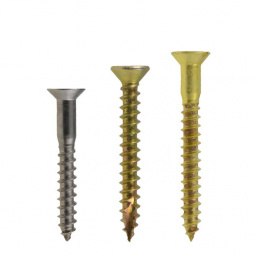
- Countersunk timber screws - length is measured from the TOP of the head to the tip. The conical head sits flush in a matching countersunk hole, so the head depth IS part of the screw's total length in the work.
- Tee nuts and timber insert nuts - length is the full body of the insert as it sits in the timber, from the underside of the flange to the bottom of the threaded body. NOT just the threaded portion.
- Barrel and cross-dowel nuts - length is the overall length of the cylindrical body.
Match the insert, nut or screw length to the panel thickness so the assembled face sits flush.
A NOTE ON GALLING
Stainless A2-70 threads can gall (cold-weld) when assembled under load, especially at higher torque. To avoid galling: tighten by hand for the first few turns, apply a smear of anti-seize compound on the threads, and avoid impact drivers on stainless. If a stainless JCB bolt locks up before reaching the seated face, back it out before forcing - a galled thread is unrecoverable.
OUR RANGE
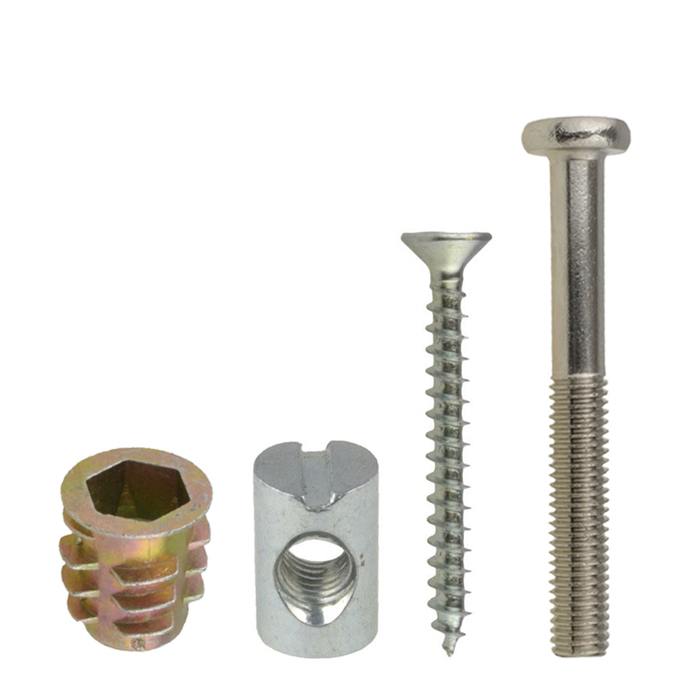
Furniture Connector JCB Bolts - flat-head bolts with an internal hex drive (4mm key for M6, 5mm for M8), the visible fastener in a knock-down joint. The head sits flush in a counterbored hole on the show face; the shank passes through the panel and threads into a barrel nut in the mating piece. M6 and M8 in Nickel Plated Class 4.6 (29 SKUs) and A2-70 G304 stainless (14 SKUs) - 43 SKUs total.
Barrel Nuts - cylindrical nuts that sit in a cross-bored hole in the mating piece, with the JCB bolt threading into the side through an aligned hole. The barrel rotates inside the panel until the threads align - that is by design and lets you snug up the joint from the show face without holding the nut. Sized to match M6 and M8 JCB bolts in zinc plated steel and stainless.
Cross Dowel Nuts - the alternative naming (and a slightly different head profile) for the same panel-insert nut family as barrel nuts. Often supplied with a slotted top face so the dowel can be aligned with a flat-blade screwdriver during assembly. Used interchangeably with barrel nuts on most flat-pack designs.
Tee Nuts - prong-flanged nuts pressed into a drilled hole in the back face of a panel, with three or four prongs that bite into the timber as the nut is hammered home. Once seated, the prongs lock the nut against rotation so the bolt can be tightened from the other side without holding the nut. Standard for timber legs, table aprons and chair seats.
Timber Insert Nuts - threaded brass or steel inserts that screw INTO a pre-drilled hole in timber, leaving an internal thread for a machine screw to mate with. Used when you need a strong, demountable thread in soft timber or MDF without the prongs of a tee nut showing on the back face. Standard for kitchen legs, plinth fixings and demountable shelves.
Countersunk Timber Screws - one-piece self-threading screws with a tapered head designed to sit flush with the timber surface after install. The complement to all the demountable connectors above - used for the fixed, permanent timber-to-timber joints (carcase backs, drawer bottoms, fixed shelf cleats) that sit between the demountable assembly points. Pilot drill is recommended in hardwoods.
Need help choosing the right grade or size? Our Technical Resources page has specification guides and technical charts. Prices include GST and free standard delivery anywhere in Australia.
TECHNICAL RESOURCES
Per-sub-category CAD drawings and specification PDFs are available on each sub-cat page (see OUR RANGE links above). Run the Full Pipeline (Option 1) after this SEO Excel is in place to inject the auto-built CAD/PDF link tables here.
FREQUENTLY ASKED QUESTIONS
When should I use a JCB bolt with a barrel nut versus a tee nut?
Pick JCB + barrel nut when both pieces are timber panels (typical flat-pack carcase) and you want to disassemble the joint later. Pick a tee nut when you need a strong thread in a single piece of timber for a machine screw to engage (table apron, chair seat, demountable leg). Tee nuts stay in the timber permanently; the bolt comes in from the outside. JCB + barrel is removable from both sides; tee nut is one-way.
How do I match panel thickness to JCB bolt length?
The JCB bolt length is measured from under the head to the tip. Add the panel thickness to the depth the barrel nut sits in the mating piece (usually 10-15mm), and pick a bolt length within 2-3mm of that total. Too long and the bolt bottoms out before the head seats; too short and the threads don't reach the barrel nut. Standard panel thicknesses are 16mm and 18mm - we stock JCB bolts in matching lengths.
What hole size do I drill for a barrel nut?
Match the barrel diameter exactly - the barrel should rotate freely inside the cross-bored hole so you can align the threads with the incoming JCB bolt. M6 barrel nuts typically need a 10mm cross hole; M8 barrel nuts a 12mm cross hole. Check the spec sheet for the exact barrel you have - dimensions vary slightly between suppliers.
Why do countersunk timber screws need a pilot hole?
In hardwoods (oak, jarrah, blackwood, etc.) the screw can split the timber as the tapered head wedges into the countersunk hole. A pilot hole 2mm smaller than the screw shank diameter relieves the splitting force and lets the screw thread cut cleanly. In softwoods (pine, MDF) a pilot is optional but still helps the screw drive straight. Countersink the top of the pilot to match the head angle so the head sits flush, not proud.
Which hex key fits an M6 vs M8 JCB bolt?
M6 JCB bolts use a 4mm hex key. M8 JCB bolts use a 5mm hex key. Both are standard sizes you'll find in any folding hex-key set or T-handle driver. Don't substitute an SAE key for a metric one - a 5/32 inch is close to 4mm but not identical and will round the socket out under torque.
Nickel plated or stainless - which JCB bolt should I pick?
Nickel Plated for indoor cabinetry where appearance and price matter - bright silver finish, decorative use, indoor only. Stainless A2-70 G304 for kitchens, bathrooms, laundries, outdoor furniture or anywhere the joint might see moisture. Stainless costs more but won't corrode under condensation or wash-down. Don't mix the two in one assembly - the nickel will corrode preferentially next to the stainless.
Can I use nickel plated JCB bolts outdoors?
No. Nickel plating is decorative, not protective - the plating layer is thin (5-10 microns) and will corrode within months in outdoor service. For outdoor furniture, marine applications, or anywhere the joint might get wet, switch to A2-70 G304 stainless. Stainless costs more but is the correct choice for any wet-service or coastal exposure.
In what order do I install a JCB + barrel nut joint?
Drill the panel hole for the JCB bolt shank and the cross-bored hole for the barrel nut first - drill both in the correct positions before any glue or assembly. Drop the barrel nut into the cross-bored hole. Rotate it so the threads align with the panel hole (use a flat-blade screwdriver in the barrel's top slot if it has one). Pass the JCB bolt through the panel into the barrel, and tighten with a 4mm (M6) or 5mm (M8) hex key until the panels pull tight. Don't over-torque - the timber will compress before the bolt fails.
What is the difference between a barrel nut and a cross dowel?
Functionally they are the same family - a cylindrical nut that sits in a cross-bored hole and mates with a JCB bolt. Cross dowel usually refers to a barrel with a slotted top face (for screwdriver alignment); plain barrel nut usually refers to a smooth-top barrel. The threads, sizes and applications are identical - pick whichever the design or your stock prefers.
Can I substitute a tee nut for a timber insert nut?
Sometimes but not always. Tee nuts have prongs that show on the back of the panel - if the back is a show face (visible side), you need a timber insert nut instead (screws in flush from one side, no back-face hardware). Tee nuts give stronger pull-out resistance in soft timber; timber insert nuts are cleaner and work in MDF. Pick by which side of the panel is visible and what the assembly load is.
Are timber insert nuts strong enough for kitchen leg fixings?
Yes, in MDF carcases (the standard kitchen build). Use M6 or M8 timber inserts with a matching machine screw - the insert resists rotation in the MDF and the screw gives a demountable, repeatable thread. For solid timber legs, tee nuts give better pull-out strength. Either way, use a torque-limited driver - over-tightening will strip the insert out of the panel.
Can I reuse a JCB bolt after disassembly?
Yes, repeatedly - that's the entire point of a demountable joint. JCB bolts and barrel nuts are designed for multiple assembly cycles (a typical flat-pack item might be assembled and disassembled 5-10 times in its life without thread wear). Inspect the head socket for any rounding before re-use; if the hex key slips, replace the bolt. Stainless lasts longer than nickel plated for repeat-cycle use.
WHY AUSTRALIA TRUSTS BOLT & NUT
With 13+ years selling fasteners online from Brisbane, we hold over 25,000 stock lines and 200 million pieces - 98.75% of online orders placed before 1pm leave same day. Save more as you buy more - we offer up to 13 price breaks plus 3 spend-tier discounts. Read our customer reviews or get in touch if you need help picking the right furniture fastener.
-
Barrel Nut -
Countersunk Timber Screws -
Cross Dowel Nut -
Furniture Connector JCB Bolts -
Tee Nut -
Timber Insert Nut
-
Free shipping
In stock
M4 x 10mm Metric Coarse Zinc Flange Threaded Timber Insert Nuts (4mm Key) Low TensileAs low as $0.085 each -
Free shipping
In stock
M5 x 10mm Metric Coarse Zinc Flange Threaded Timber Insert Nuts (5mm Key) Low TensileAs low as $0.085 each -
Free shipping
In stock
M6 x 13mm Metric Coarse Zinc Flange Threaded Timber Insert Nuts (6mm Key) Low TensileAs low as $0.153 each -
Free shipping
Sold Out
M6 x 18mm Metric Coarse Zinc Flange Threaded Timber Insert Nuts (6mm Key) Low TensileAs low as $0.306 each -
Free shipping
In stock
M6 x 13mm Metric Coarse Zinc No Flange Threaded Timber Insert Nuts (6mm Key) Low TensileAs low as $0.102 each -
Free shipping
In stock
M8 x 1.25p x 11mm Metric Coarse Stainless A2-70 G304 Tee Nuts 4 Prong DIN 1624As low as $0.672 each -
Free shipping
In stock
M8 x 13mm Metric Coarse Zinc Flange Threaded Timber Insert Nuts (8mm Key) Low TensileAs low as $0.306 each -
Free shipping
In stock
M8 x 15mm Metric Coarse Zinc Flange Threaded Timber Insert Nuts (8mm Key) Low TensileAs low as $0.204 each -
Free shipping
In stock
M8 x 15mm Metric Coarse Zinc No Flange Threaded Timber Insert Nuts (8mm Key) Low TensileAs low as $0.136 each -
Free shipping
In stock
M10 x 1.50p x 13mm Metric Coarse Stainless A2-70 G304 Tee Nuts 4 Prong DIN 1624As low as $0.893 each -
Free shipping
In stock
M10 x 14mm Metric Coarse Zinc Flange Threaded Timber Insert Nuts (10mm Key) Low TensileAs low as $0.272 each -
Free shipping
In stock
M10 x 19mm Metric Coarse Zinc Flange Threaded Timber Insert Nuts (10mm Key) Low TensileAs low as $0.272 each
100+ furniture fasteners ex stock Brisbane for flat-pack, cabinetry, joinery and shop fittings. JCB connector bolts, barrel and cross dowel nuts, tee nuts, timber insert nuts and countersunk timber screws - everything you need for demountable and permanent timber assembly. Same-day dispatch on orders placed before 1pm.