Header imageFREE Delivery Header imageAustralian OwnedHeader imageSpend DISCOUNTS

Allthread

Allthread
Not sure what size or thread you have or need?
Compare your allthread to our visual size guide to confirm the diameter, thread and pitch before you order.
If you know the fastener diameter

Compare your fastener to our visual size guide to confirm size, pitch and length.

Open the identification guide ›

Allthread / threaded rod diagram showing diameter and thread

Allthread / Threaded Rod for Structural, Engineering and Hanging Applications

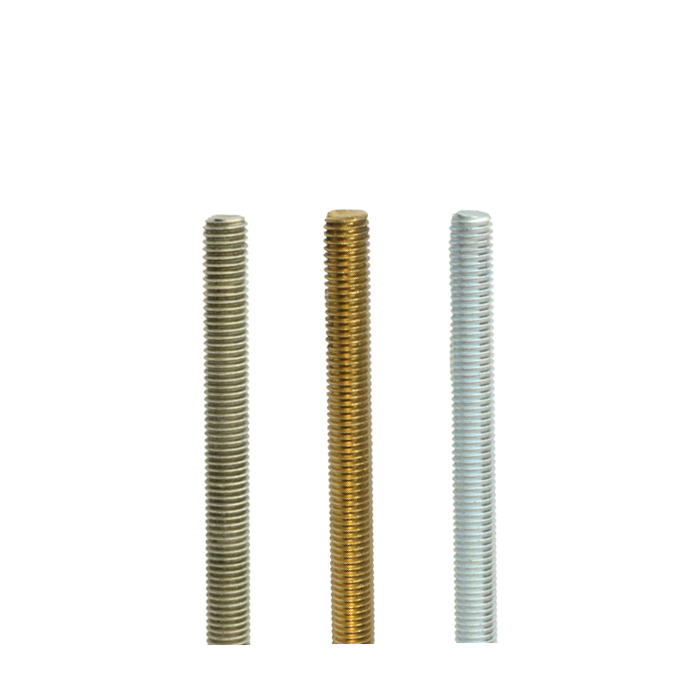
Allthread (also called threaded rod or studding) is a length of rod fully threaded along its entire length. It's cut to size and tightened between two nuts and washers to form a custom-length structural fastener, hanger or tie rod — wherever a standard-length bolt won't reach.

Used for through-bolting structural timber, hanging suspended ceilings and HVAC ducts, anchoring brackets and equipment, tying formwork, bolting through concrete walls, and assembling machine bases. Allthread is the right answer whenever you need a longer-than-standard threaded fastener — or a fixing where both ends need a nut. Always pair with the appropriate nuts and washers. For pre-made fixed-length variants see our bolts range.

We stock 208 allthread variants from our Brisbane warehouse across six thread profiles — metric coarse, metric fine, UNC/BSW, UNF, BSF and left-hand thread — in materials from low-tensile Class 4.6 zinc through high-tensile Class 8.8, marine-grade A4-70 G316 stainless, brass, nylon and hot-dip galvanised. Sizes from M3 to M42 metric, 1/8" to 1" imperial, in standard lengths of 1 metre (1000mm) and 3 foot (914mm).

Check our reviews from DIY, tradespeople, builders, manufacturers, government, councils and engineers across Australia.

MATERIALS AND COATINGS

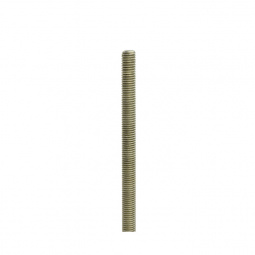
Low-tensile mild steel (Class 4.6) — The everyday structural choice. Yield around 240 MPa, ultimate tensile 400 MPa. Supplied zinc plated (silver), zinc plated (yellow), hot-dip galvanised or plain black uncoated. Used wherever working loads are moderate and corrosion is the bigger consideration.

High-tensile alloy steel (Class 8.8) — For heavier structural loads. Yield 640 MPa, ultimate tensile 800 MPa. Roughly double the working load of Class 4.6 at the same diameter, so you can use a smaller rod for the same job. Supplied zinc plated.

Stainless A2-70 G304 — Standard 18/8 austenitic stainless. Ultimate tensile 700 MPa minimum, comparable to Class 4.6 in strength but with full corrosion resistance for indoor and mild outdoor environments. Slightly magnetic after cold-working — see our stainless magnetism FAQ.

Stainless A4-70 G316 (marine grade) — Molybdenum-bearing stainless with full chloride resistance. The right choice for coastal, marine, swimming-pool, treated-timber and chemical-exposure work. Ultimate tensile 700 MPa minimum.

Stainless A4-50 G316 — Reduced-strength marine stainless (500 MPa minimum). Used where corrosion resistance matters more than ultimate strength — typical for nylon-insert nut threads or non-load-bearing fixings.

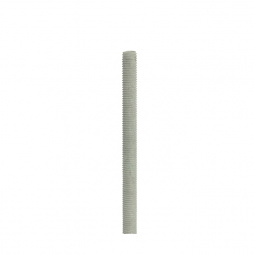
Hot-dip galvanised mild steel — Thick zinc layer applied via molten dip. The most durable plain-steel finish for outdoor exposure — tens of years of life on most applications. Used for structural timber framing, treated-pine decks and outdoor brackets.

Brass — Soft, non-magnetic, naturally corrosion-resistant. Used in marine, electrical and decorative work where the visual finish matters or where ferrous tools/equipment can't be used (radio, magnetic-sensor proximity, sparking environments).

Nylon (polyamide) — Lightweight, non-conductive, non-magnetic plastic allthread. Used in electrical isolation, salt-water exposure, and very-low-load applications where any metallic option would corrode or short.

CLASSES AND GRADES

Class 4.6 (low tensile) — Yield 240 MPa, ultimate tensile 400 MPa. Standard mild-steel grade. The 4.6 designation means the rod has a nominal tensile strength of 400 MPa (4 x 100) and a yield of 60% of that (4.6).

Class 8.8 (high tensile) — Yield 640 MPa, ultimate tensile 800 MPa. Quenched and tempered carbon or alloy steel. Used wherever the design loads exceed what Class 4.6 can handle — structural timber tie-downs, machine bases, heavy anchoring.

A2-70 G304 (stainless) — Ultimate tensile 700 MPa minimum, austenitic stainless. Standard stainless grade.

A4-70 G316 (marine stainless) — Ultimate tensile 700 MPa minimum with molybdenum for chloride resistance.

A4-50 G316 — Ultimate tensile 500 MPa minimum. Reduced strength but full marine-grade corrosion resistance.

Grade 2 (low tensile imperial) — The imperial equivalent of Class 4.6 — low-carbon steel, ultimate tensile around 510 MPa, used on our BSW and UNC imperial range.

THREAD TYPES

Allthread comes in six thread profiles. The thread you choose must match the nuts and threaded holes you're mating it to. Most Australian structural and commercial work uses Metric Coarse; older imperial gear, US-imported equipment and some specialist applications use the other profiles.

Metric Coarse — The standard Australian and international thread profile (DIN 975). M3 through M42 in our range. Pitch is the wider of the two metric options — faster to assemble, more tolerance for misalignment, easier to thread by hand. Use this unless you have a specific reason not to.

Metric Fine — Same diameter as the coarse equivalent but with a finer pitch. Better vibration resistance and finer torque control. M8 to M16 available in A4-70 G316 stainless. Used in precision instruments, vibration-prone applications and some imported machinery.

UNC / BSW (imperial coarse) — American Unified National Coarse and British Standard Whitworth coarse threads. Despite originating as different standards, the two are nearly interchangeable for general work and we stock them together. Sizes 1/8" through 1" in IFI 136C and AS3501 standards.

UNF (imperial fine) — Unified National Fine. The imperial fine-pitch equivalent of UNC. Better vibration resistance, finer thread control. 1/4" through 1/2" in A4-70 G316.

BSF (British Standard Fine) — British equivalent of UNF, slightly different thread angle (55° vs 60°). Used on older British, European and Australian equipment from before metric standardisation.

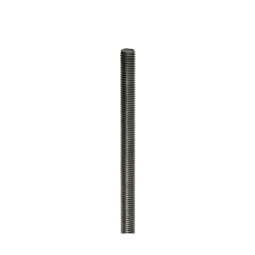
Left-Hand Thread — Metric coarse, but the thread spirals the opposite direction. Tightens anti-clockwise, loosens clockwise. Used in applications where the joint would otherwise vibrate loose (turnbuckles, certain rotating equipment) or where space requires it (paired left-and-right thread tensioners). M6 to M42 in plain black.

SIZES AND LENGTHS

Metric range: M3, M4, M5, M6, M8, M10, M12, M16, M20, M24, M30, M36, M42 (coarse); M8 to M16 (fine); M6 to M42 (left-hand).

Imperial range: 1/8", 3/16", 1/4", 5/16", 3/8", 7/16", 1/2", 5/8", 3/4", 7/8", 1" across UNC/BSW; smaller subset in UNF and BSF.

Stock lengths: 1 metre (1000mm) is the standard length for metric allthread. Imperial allthread is sold in 3 foot (914mm) lengths. Cut to size with a hacksaw or angle grinder and dress the cut end with a thread file before fitting a nut.

STANDARDS

DIN 975 — The German Industrial Standard for metric threaded rod (coarse and fine). Internationally recognised — our entire metric range is manufactured to this spec. 148 of our 208 lines.

IFI 136C — The Industrial Fastener Institute standard for unified threaded rod (UNC and UNF). Covers dimensional tolerances and mechanical properties for our American-thread range.

AS3501 — The Australian Standard for hexagon-head bolts and threaded fasteners with imperial threads. Used on our BSW and BSF imperial range.

OUR RANGE

Metric coarse allthread — The everyday metric allthread (DIN 975). M3 through M42 in stainless A2-70 G304, A4-70 G316, galvanised, zinc plated, brass and nylon. 134 variants.

UNC / BSW allthread — Imperial coarse-thread allthread for American and British-standard fittings. 1/8" through 1" in stainless, zinc plated and brass. 53 variants.

Left-hand thread allthread — Metric coarse with reverse-spiral thread. M6 through M42 in plain black. For turnbuckles, vibration-prone joints and counter-rotating assemblies. 8 variants.

Metric fine allthread — Fine-pitch metric for vibration resistance and precision torque control. M8 through M16 in A4-70 G316 marine stainless. 6 variants.

UNF (unified fine) allthread — Imperial fine-pitch. 1/4" through 1/2" in A4-70 G316. 4 variants.

BSF (British Standard Fine) allthread — British imperial fine thread for legacy equipment. 1/4" through 3/8" in A4-70 G316. 3 variants.

FREQUENTLY ASKED QUESTIONS

Can stainless fasteners be used with aluminium?

Yes — and for most applications, no special precautions are needed. The combination is widely used in industries where strength and corrosion resistance matter (marine, automotive, structural aluminium). For applications with sustained moisture or salt exposure, a few simple steps (barrier washer, sealant, matched-anodising) prevent any long-term galvanic corrosion concerns. Full guidance: Can stainless fasteners be used with aluminium?

What's the difference between Class 4.6 and Class 8.8?

The numbers describe tensile strength. Class 4.6 has a nominal ultimate tensile strength of 400 MPa with a yield at 60% of that (240 MPa). Class 8.8 has 800 MPa ultimate, 640 MPa yield — roughly double the working load capacity at the same diameter. Use Class 4.6 for general structural work where loads are moderate; switch to Class 8.8 for heavier structural tie-downs, machine bases and anywhere the design load exceeds what 4.6 can handle. Class 8.8 is also less prone to thread stripping under high tensioning.

What's the difference between coarse and fine thread?

Coarse-thread pitch is wider (fewer threads per inch / per millimetre) than fine-thread for the same diameter. Coarse is the everyday default — faster to assemble, more tolerant of misalignment, easier to thread by hand, less prone to cross-threading. Fine threads have more contact area per millimetre of engagement, so they hold better against vibration and give finer torque control — used in precision instruments, rotating equipment and applications where the joint will experience cyclic loading. For general construction and fabrication use coarse; for vibration-prone or precision work use fine.

Can I cut allthread to length?

Yes — allthread is designed to be cut. Use a hacksaw, junior hacksaw or angle grinder with a cutting disc. After cutting, dress the end with a thread file or a small grinding wheel to clean the burr off the last thread — otherwise the first nut won't start easily and may cross-thread. A quick trick: thread a nut onto the rod past the cut point BEFORE you cut, then unscrew it back off after the cut — the nut re-cuts the damaged end thread as it comes off, leaving the rod ready for use.

Can allthread be used outdoors?

Stainless A2-70 G304, A4-70 G316 and hot-dip galvanised — yes, suitable for outdoor use. A4-70 G316 is the right choice for coastal, marine or treated-timber exposure. Hot-dip galvanised has the thickest zinc layer of any plain-steel finish and lasts decades on framing and bracket work. Zinc plated mild steel (silver and yellow) — INTERNAL USE ONLY. The plating is thin and the steel core will rust within months in wet or salty exposure. Brass and nylon are non-ferrous so they don't rust at all, but they have lower load capacity than steel options.

What nuts and washers do I need with allthread?

Match the thread profile and material to the rod. For Metric Coarse rod use a Metric Coarse nut; for UNC/BSW rod use a matching UNC/BSW nut. Material should be at least as corrosion-resistant as the rod — stainless rod with stainless nuts (A4 with A4, A2 with A2), galvanised rod with galvanised nuts, zinc rod with zinc nuts. Mixing materials (e.g. stainless rod into zinc nut) accelerates corrosion via galvanic action. See our full nuts and washers ranges for matching fittings.

Why use left-hand thread allthread?

Left-hand thread allthread (M6 to M42, plain black) tightens anti-clockwise and loosens clockwise — the opposite of standard right-hand thread. Three main uses: turnbuckles (one end left-hand, one end right-hand — rotating the centre body tightens both ends simultaneously), rotating-equipment anti-loosening (machinery shafts that rotate in one direction will work their own fasteners loose if the thread spirals the wrong way), and counter-rotating threaded assemblies (turnbuckle-like tensioners on awnings, sailing rigging, anchor systems).

Are imperial threads (UNC, BSW, UNF, BSF) interchangeable?

Mostly no, with one exception. UNC and BSW (American and British coarse) share enough thread geometry that we stock them together — a UNC nut will typically fit a BSW rod and vice versa for common sizes, though purists argue this is a 'close fit' rather than a 'correct fit'. UNF and BSF are NOT interchangeable: they have different thread angles (60° vs 55°) and you'll cross-thread if you try. Check the standard marking before mixing — and when in doubt, use the matching nut from the same family.

What standard are your allthread rods made to?

Metric range (coarse, fine and left-hand) is manufactured to DIN 975 — the international metric threaded-rod standard. Imperial UNC and UNF range follows IFI 136C — the Industrial Fastener Institute spec. BSW and BSF imperial range follows AS3501 — the Australian Standard for imperial-thread fasteners. All three standards cover dimensional tolerances and mechanical properties so you can rely on consistency batch-to-batch.

WHY AUSTRALIA TRUSTS BOLT & NUT

Buy with confidence: 15+ years experience selling online, > 25,000 stock lines, 200 million pieces ex stock in Brisbane QLD

Prices: Includes GST, a Tax Invoice and Free Standard Delivery anywhere in Australia

Up to 13 price breaks and 3 levels of spend discounts available on every product.

98.75% of orders placed before 1pm leave our Brisbane warehouse the same day.

Read what our customers say — reviews from DIY, tradespeople, builders, manufacturers, government, councils and engineers across Australia.

  1. Close Icon
    BSF
  2. Close Icon
    Left Hand Thread
  3. Close Icon
    Metric Coarse
  4. Close Icon
    Metric Fine
  5. Close Icon
    UNC BSW
  6. Close Icon
    UNF
View as Grid List

Items 1-40 of 199

Set Descending Direction
Page
per page

208+ allthread variants ex stock Brisbane — metric coarse, metric fine, UNC/BSW, UNF, BSF and left-hand thread. M3 to M42, 1/8" to 1". Class 4.6, 8.8, A2-70, A4-70, galvanised, brass, nylon. 1m, 3m and 3ft stock lengths.

TECHNICAL RESOURCES

Every allthread subcategory has its CAD drawings and spec PDFs linked at the bottom of its page. For the full technical library covering allthread and every other product range we stock, see our Technical PDF's Library, and for torque, tensile and proof-load charts see the Charts and Calculators section.

scroll icon